
 Google Scholar
Global Localiser for Automated Guided Vehicles (AGV)
Published:
Project that realized an alternative to GPS-based localization for autonomous vehicles, relying entirely on Artificial Vision and Statistical Methods. 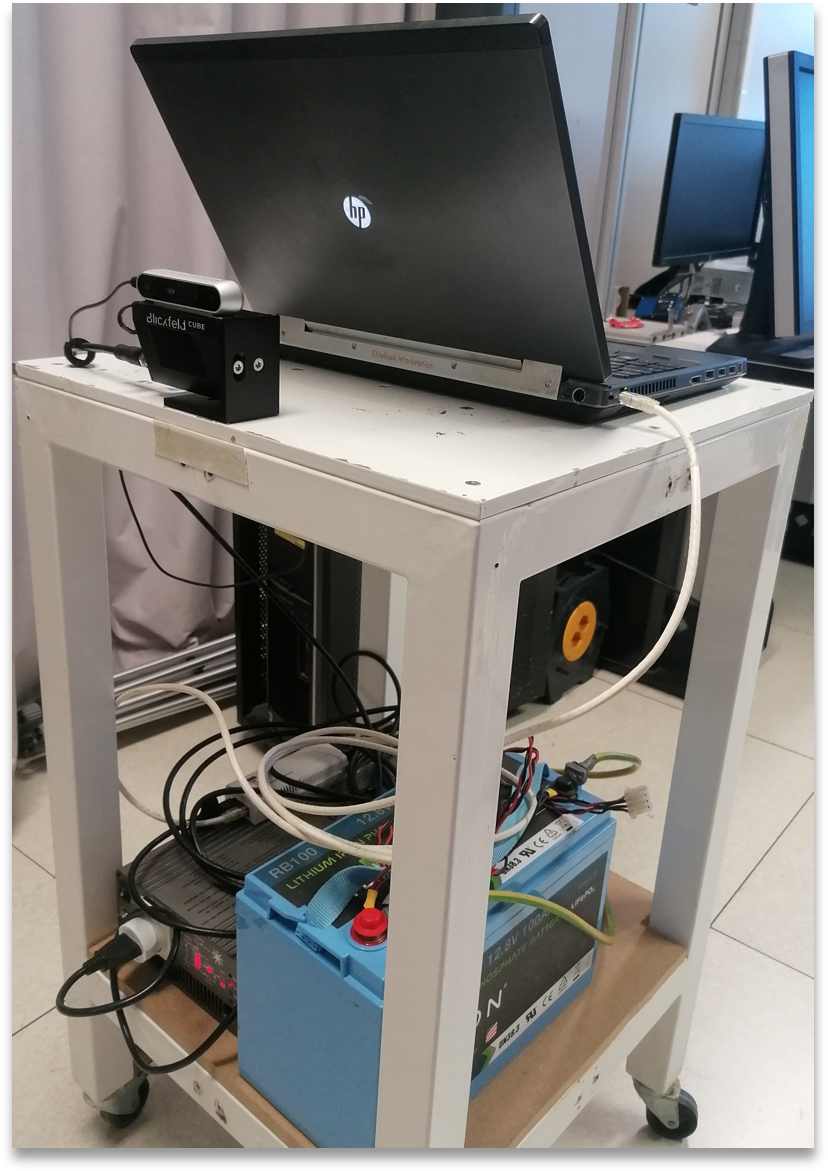
Published:
Project that realized an alternative to GPS-based localization for autonomous vehicles, relying entirely on Artificial Vision and Statistical Methods.
Published:
This project presents a MATLAB-based application for Brain Tumor Segmentation in MRI scans. The approach is based on the procedure described in this work. 
Published:
Real-time messaging web application inspired by WhatsApp, developed with the MERN stack and Socket.IO. It enables users to sign up, log in, add friends, and exchange messages instantly. 
Published:
This project creates a GCN to classify blogs within the Polblogs dataset as belonging to Conservative or Liberal. 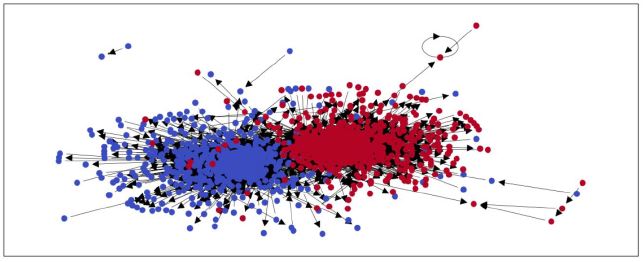
Published:
This project introduces a web app for the automatic detection of road damage along routes, using advanced machine learning and cloud technologies. It showcases a feature that could enhance tools like Google Maps by alerting users to road damage and helping them avoid hazardous paths. 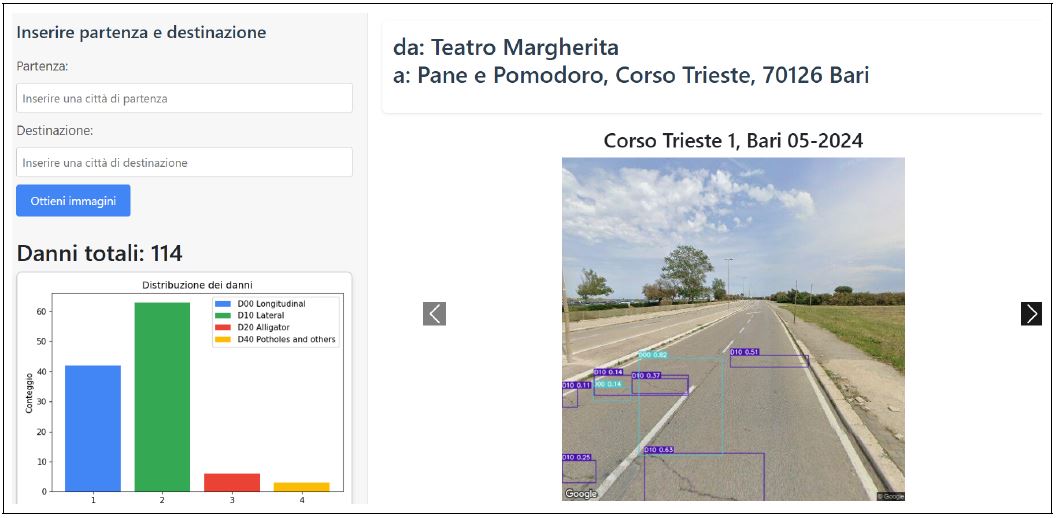
Published in SPIE Optics and Photonics for Advanced Dimensional Metrology IV, 2026
In recent years, a growing emphasis has been placed on circularity and sustainability in many industrial contexts, particularly in the textile sector, regarding production waste. However, several technical issues need to be addressed in terms of accurately measuring different fabrics or textile materials to implement an efficient and appropriate recycling process. This work discusses the problem of multiple composition classification using an hyperspectral imaging AI-driven approach that exploits deep learning classifiers based on modern Vision Transformers, either characterizing foundational models with their strengths and limitations, as well as specifically tailored architectures for advanced nonlinear dimensional metrology in the textile industry.
Recommended citation: V. Renò, A. Cardellicchio, G. Farano, et al. "AI-driven characterization of textile materials via deep learning classifiers based on vision transformers", Proc. SPIE 14084, Optics and Photonics for Advanced Dimensional Metrology IV, 1408405 (29 May 2026);https://doi.org/10.1117/12.3109314
Read the full paper
Published in 2026 IEEE 13th International Workshop on Metrology for AeroSpace (MetroAeroSpace), 2026
Manual drilling of Carbon Fiber Reinforced Polymer (CFRP) is a pivotal aerospace process where tool wear directly compromises the productivity of aircraft manufacturing. To the best of our knowledge, no previous study has yet systematically analyzed acoustic features to identify the most influential ones for tool wear monitoring in manual drilling. This study proposes a data-driven framework for tool-wear monitoring using acoustic emissions captured during manual drilling. Using a real-world dataset labeled by operator perception of effort, we extracted time and frequency domain features to train and compare different machine learning algorithms, including Logistic Regression, SVM, Random Forest, and XGBoost. Results indicate that aggressive outlier removal degrades performance, implying that outliers hold critical information in data-scarce environments. While the baseline Logistic Regression achieved an F1 score of 69.45%, the optimized XGBoost model outperformed all architectures with an F1 score of 75.81%. Furthermore, experiments revealed that using signal duration as a sole predictor yielded a notable F1 score of 66.52%. This work demonstrates that acoustic monitoring and ensemble learning are effective tools for decision support in manual drilling.
Recommended citation: Farano, Giuseppe, et al. "Acoustic Signal Characterization for Tool Wear Monitoring in Manual CFRP Drilling." 2026 IEEE 13th International Workshop on Metrology for AeroSpace (MetroAeroSpace). IEEE, 2026. https://ieeexplore.ieee.org/abstract/document/11646638/
Read the full paper
Published in 2026 IEEE 13th International Workshop on Metrology for AeroSpace (MetroAeroSpace), 2026
Defect detection in Carbon Fiber Reinforced Polymer panels represents a crucial step in aircraft production processes, to improve security and reduce maintenance costs. One of the most common strategies for inspecting this material is the use of Ultrasonic Testing, which enables the non-destructive inspection of the internal structure of objects. However, the evaluation of the ultrasonic data currently relies on domain experts, making the process few scalable and potentially inaccurate in ambiguous situations. In this study, an automated method based on Artificial Intelligence is proposed to support human operators in detecting defects on CFRP panels. The proposed solution is characterized by training an Autoencoder to perform the anomaly detection task directly on raw A-scan. Two architectures have been implemented: a Vanilla Autoencoder, which acted as the baseline, and a Convolutional-1D Autoencoder. Results show that using 1-D convolutions yielded very satisfactory performance, achieving a top F1-score equal to 67.68% for a 27plies thick panel. Additionally, the relatively lightweight architectures and the use of raw data enabled us to achieve very low inference times, specifically in the order of milliseconds, making the proposed solution applicable to real industrial scenarios.
Recommended citation: Farano, Giuseppe, et al. "Automatic Defect Detection on CFRP Panels Training Autoencoders on Raw Ultrasonic Data." 2026 IEEE 13th International Workshop on Metrology for AeroSpace (MetroAeroSpace). IEEE, 2026. https://ieeexplore.ieee.org/abstract/document/11646818/
Read the full paper
Published in Annual Meeting of the Association for Computational Linguistics 2026, 2026
Improving the reliability of large language models (LLMs) at inference time is a central challenge in structured reasoning tasks such as Text-to-SQL. Common test-time inference strategies, including Best-of-N sampling and Majority Voting, rely on heuristic signals such as execution success or output frequency, which provide limited semantic discrimination across candidate outputs. In this work, we study Outcome Reward Models (ORMs) as learned semantic scoring functions for test-time verification in Text-to-SQL. While ORMs have been previously explored for test-time scaling and alignment, their application to structured query generation remains underexplored. We introduce GradeSQL, a scalable framework for training task-specific ORMs via automated candidate generation and execution-based labeling, enabling verifier training without manual annotation. We integrate ORMs into a verification-driven Best-of-N pipeline and evaluate our approach on the BIRD and Spider benchmarks across multiple open-source LLM families. ORM-based selection consistently outperforms execution-based Best-of-N and Majority Voting, with gains of up to +4.33% on BIRD and +2.10% on Spider. We further show that ORMs scale effectively with larger candidate sets and yield stronger improvements on complex queries. Overall, our results demonstrate that ORM-based verification provides a simple, effective, and scalable alternative to heuristic test-time selection strategies for Text-to-SQL. Code, datasets, and models are publicly available.
Recommended citation: Rossiello, Gaetano, et al. "Test-Time Verification for Text-to-SQL via Outcome Reward Models." Annual Meeting of the Association for Computational Linguistics. 2026. https://research.ibm.com/publications/test-time-verification-for-text-to-sql-via-outcome-reward-models
Read the full paper
Published in Journal of Intelligent Information Systems, 2026
As Large Language Models (LLMs) become foundational to next-generation Intelligent Information Systems, the bridge between natural language interfaces and structured database systems remains a critical bottleneck. While Text-to-SQL generation enables cooperative support for complex query formulation, ensuring the reliability of these generated queries at inference time is a central challenge. Conventional methods rely on coarse execution-based signals, which may limit their ability to capture the nuanced semantic alignment required for high-stakes database environments. In this work, we propose the use of Outcome Reward Models (ORMs) as a fine-grained, probabilistic feedback mechanism for test-time verification in Text-to-SQL tasks. We introduce GradeSQL, a framework for training task-specific ORMs that assign scalar utility scores to candidate SQL queries based on their semantic correctness and alignment with database schema. Our approach is evaluated on the BIRD and Spider benchmarks across multiple open-source LLM families. Experimental results demonstrate that ORM-based verification consistently outperforms traditional execution-based heuristics.
Recommended citation: Tritto, M., Farano, G., Di Palma, D. et al. GradeSQL: Outcome reward models for intelligent Text-to-SQL generation from LLMs. J Intell Inf Syst (2026). https://doi.org/10.1007/s10844-026-01071-6
Read the full paper
Published:
This is a description of your talk, which is a markdown file that can be all markdown-ified like any other post. Yay markdown!
Published:
This is a description of your conference proceedings talk, note the different field in type. You can put anything in this field.
Undergraduate course, University 1, Department, 2014
This is a description of a teaching experience. You can use markdown like any other post.
Workshop, University 1, Department, 2015
This is a description of a teaching experience. You can use markdown like any other post.